How long Invisalign takes depends on how far your teeth need to move, whether your bite needs correcting and how consistently you wear the aligners. Here is how your estimate is worked out, what tends to lengthen treatment, and what happens after the last aligner.
In short
|
What this guide covers
- How long Invisalign treatment takes
- How aligners move teeth
- The stages of Invisalign treatment
- What a normal week with aligners looks like
- What makes Invisalign take longer
- Can treatment be shortened?
- Invisalign compared with braces on timing
- What happens after the last aligner
- Questions to ask about your Invisalign timeline
- Invisalign at Misora Dental
- Frequently asked questions
How long does Invisalign take in Singapore? For an adult with mild crowding or spacing, treatment is measured in months; correcting the bite takes longer. A useful estimate comes only after an examination and a ClinCheck plan, which maps every planned tooth movement aligner by aligner. This guide explains how that estimate is built and what changes it.
How long Invisalign treatment takes
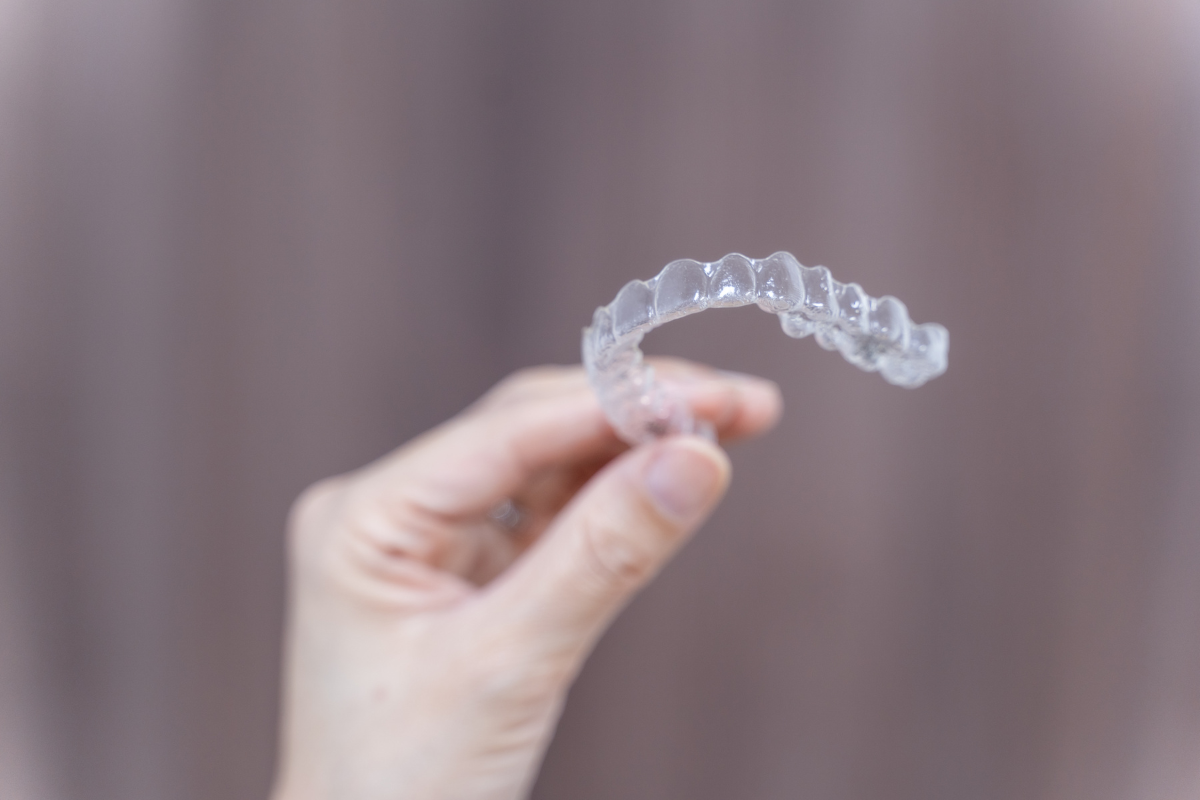
Invisalign moves teeth with a series of clear, removable aligners. Each aligner is shaped slightly differently from the one before and moves a few teeth by a small amount. You switch to the next one about every one to two weeks. Total time is roughly the number of aligners in your plan multiplied by how long each is worn, plus any refinement stages at the end.
So two people who start on the same day can finish months apart. Closing a small gap between two front teeth may need a short series of aligners. Straightening both arches and changing how the teeth meet needs many more.
Published averages give a reference point. A study compared 48 Invisalign patients with 48 patients in fixed braces, all with mild to moderate problems. The Invisalign group finished an average of 5.7 months sooner, with similar final scores on a standard index of tooth alignment (Gu et al., 2017). The study chose suitable cases, so it tells us little about complex ones, and an average from 96 people does not predict your own timeline.
How aligners move teeth
A tooth is held in its socket by the periodontal ligament, a thin layer of fibres between the root and the bone. Steady, light pressure from an aligner compresses the ligament on one side of the root and stretches it on the other. Bone is gradually removed where the ligament is compressed and laid down where it is stretched, and the tooth moves with it.
That process sets the pace. Each aligner moves teeth by a small step, and the bone needs time to remodel before the next one. That is why the dentist sets the change interval in the plan, and why switching to the next aligner early tends to leave teeth behind.
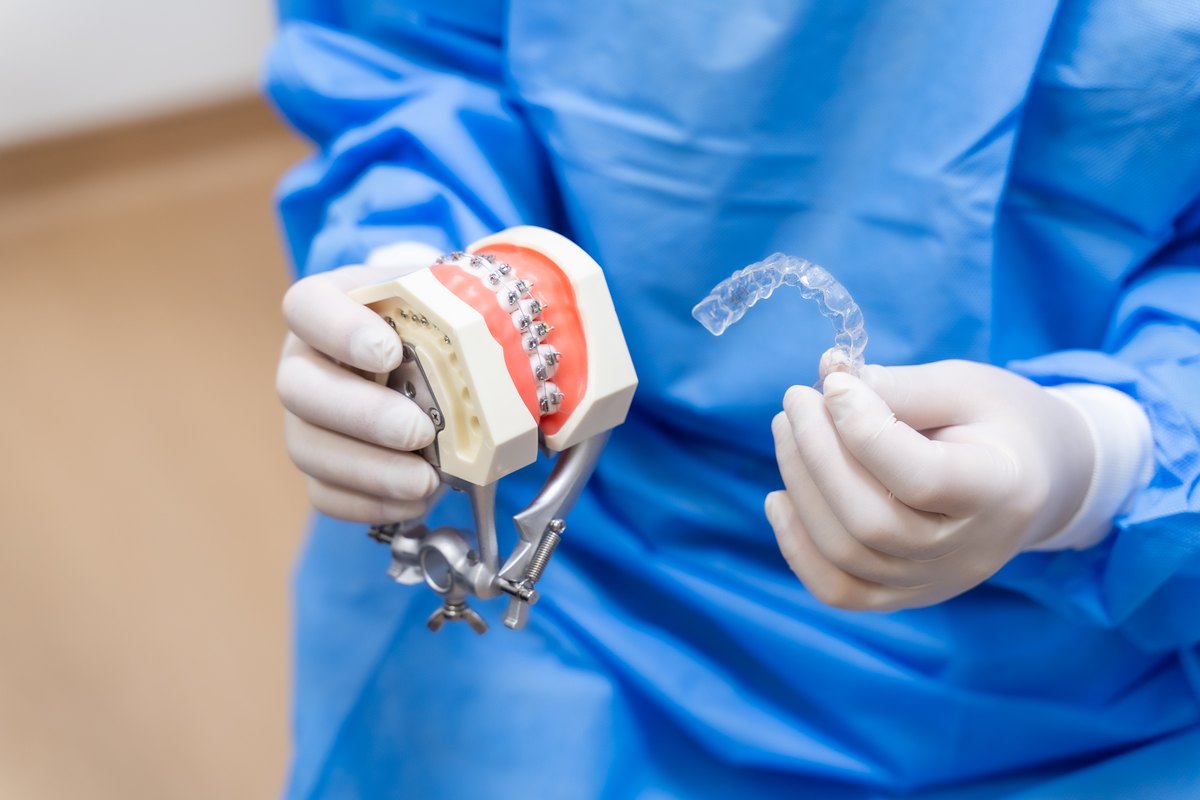
Attachments, the small tooth-coloured bumps bonded to some teeth, give the aligner a surface to push against. They help most with rotations and with moving a tooth up or down in its socket.
The stages of Invisalign treatment
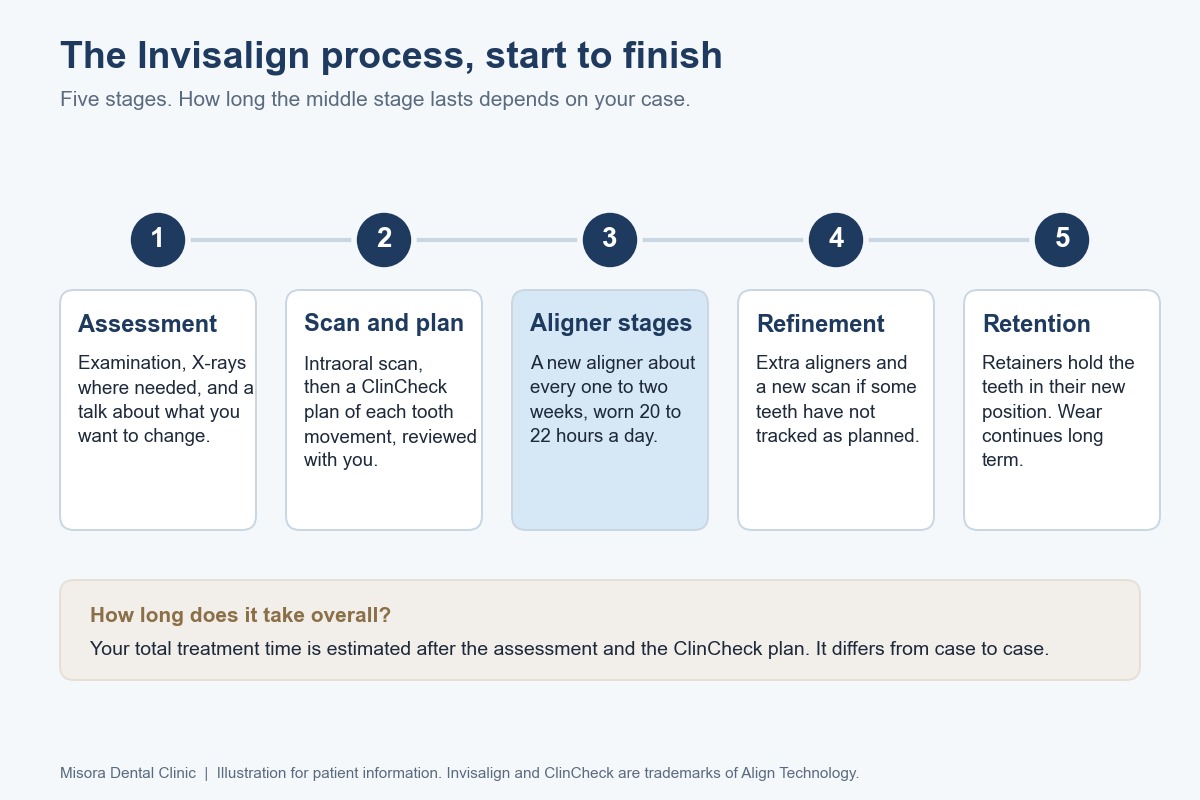
- The first visit is an assessment: an examination, X-rays where needed, and a conversation about what you would like to change. Decay or gum problems are treated before any aligners are ordered.
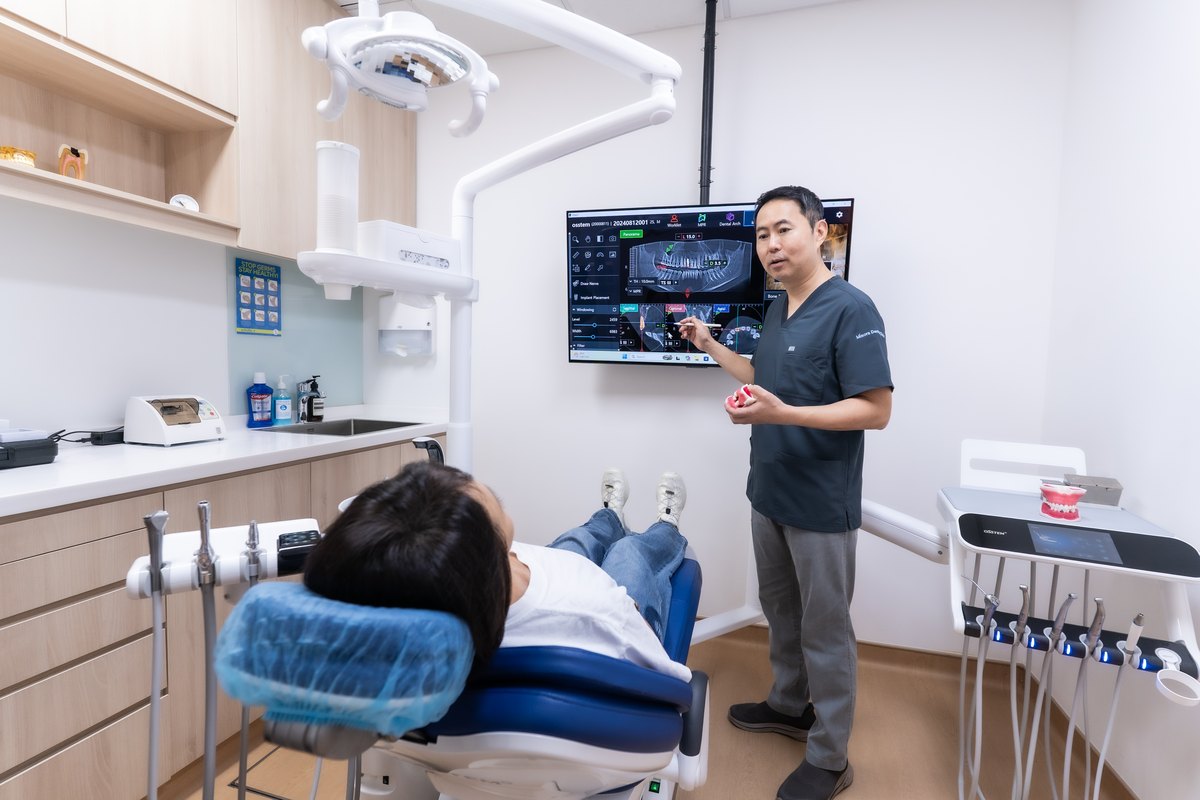
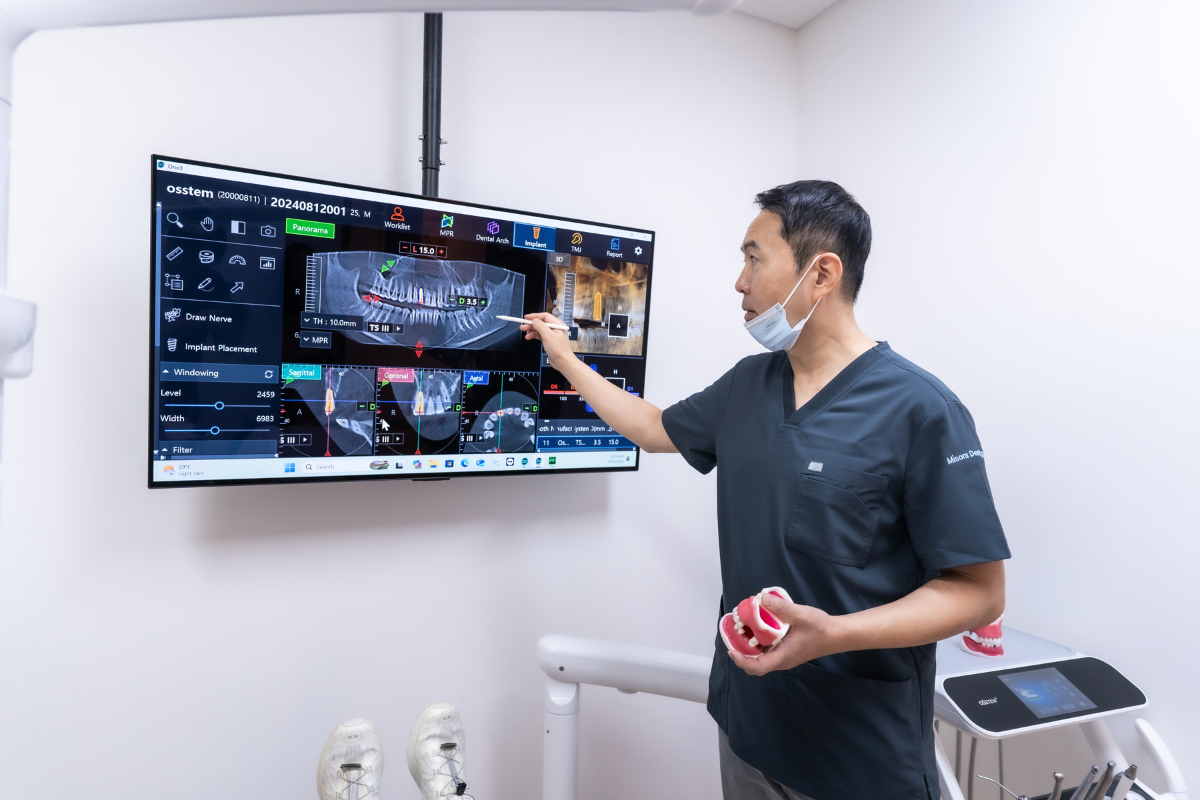
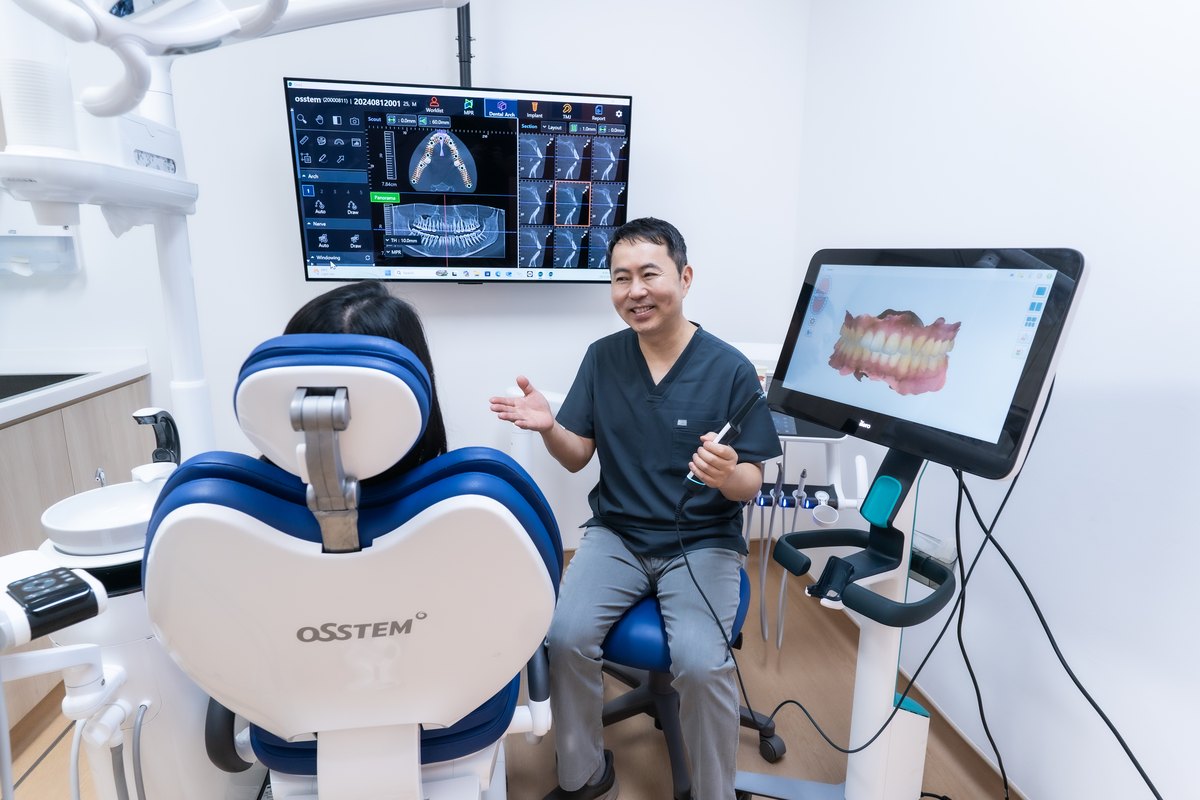
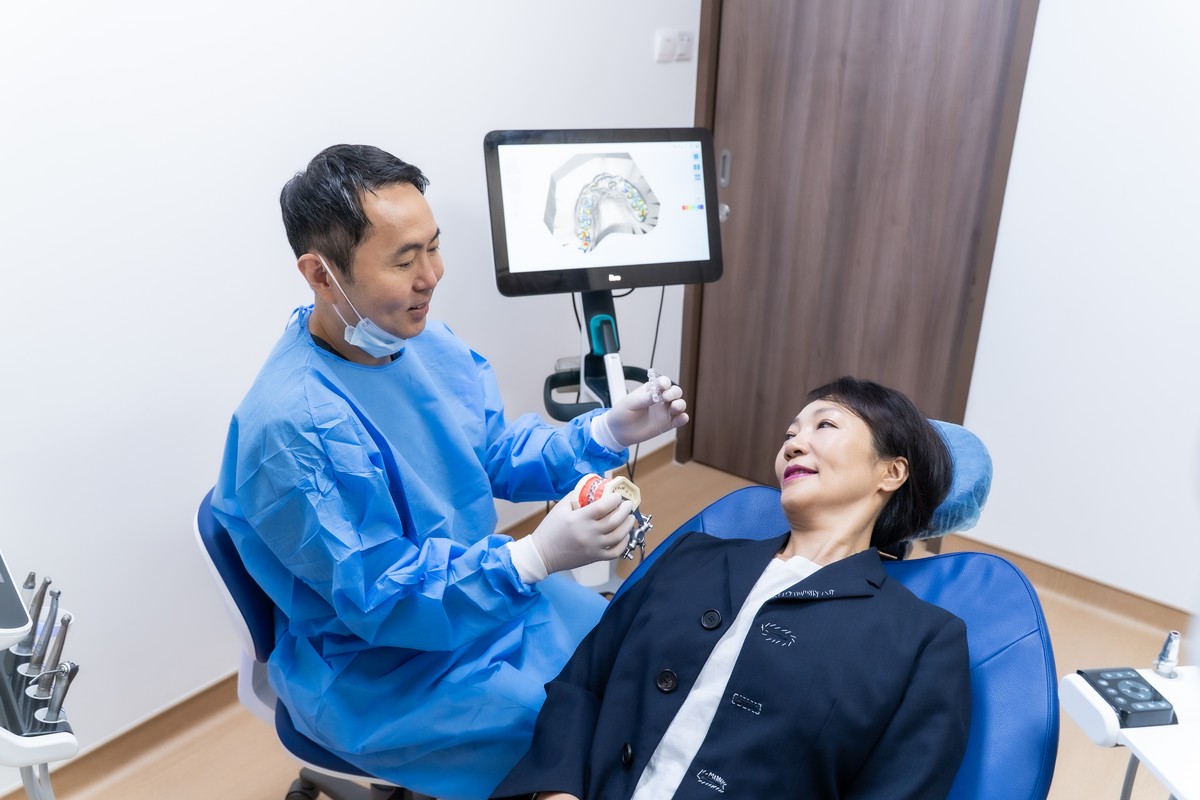
- An intraoral scanner records your teeth digitally, without putty impressions. The scan goes into ClinCheck, the planning software, where each tooth movement is set out stage by stage. You review the plan before anything is made.
- At the fitting, small tooth-coloured attachments are bonded to some teeth so the aligners have something to grip. Some plans also include interproximal reduction, a measured polish of a fraction of a millimetre of enamel between teeth to make space. You then change aligners about every one to two weeks and attend reviews in clinic.
- When some teeth have not moved fully as planned, a new scan produces refinement aligners for the remaining movement.
- Retainers are fitted once the teeth are in position. Teeth keep moving throughout life, so retainer wear continues long term.
What a normal week with aligners looks like
Most of the work happens outside the clinic. A typical day means taking the aligners out for meals, brushing before putting them back in, and wearing them the rest of the time, including overnight. Drink anything other than plain water with the aligners out, because sugary or coloured drinks can sit against the teeth under the plastic.
When you move to a new aligner, expect pressure for a day or two as the teeth start to move; it typically settles quickly. Some people notice a slight lisp in the first few days of treatment. Clean the aligners when you brush, with cool water and a soft brush, since hot water can warp the plastic.
Each new aligner should sit fully against the teeth within a day or two. A gap between the aligner and the tips of the teeth, or an attachment that has come off, is worth reporting before your next review. Keep your previous aligner as well: if the new one is lost or cracks, the dentist may ask you to wear the old one while a replacement is arranged.
What makes Invisalign take longer
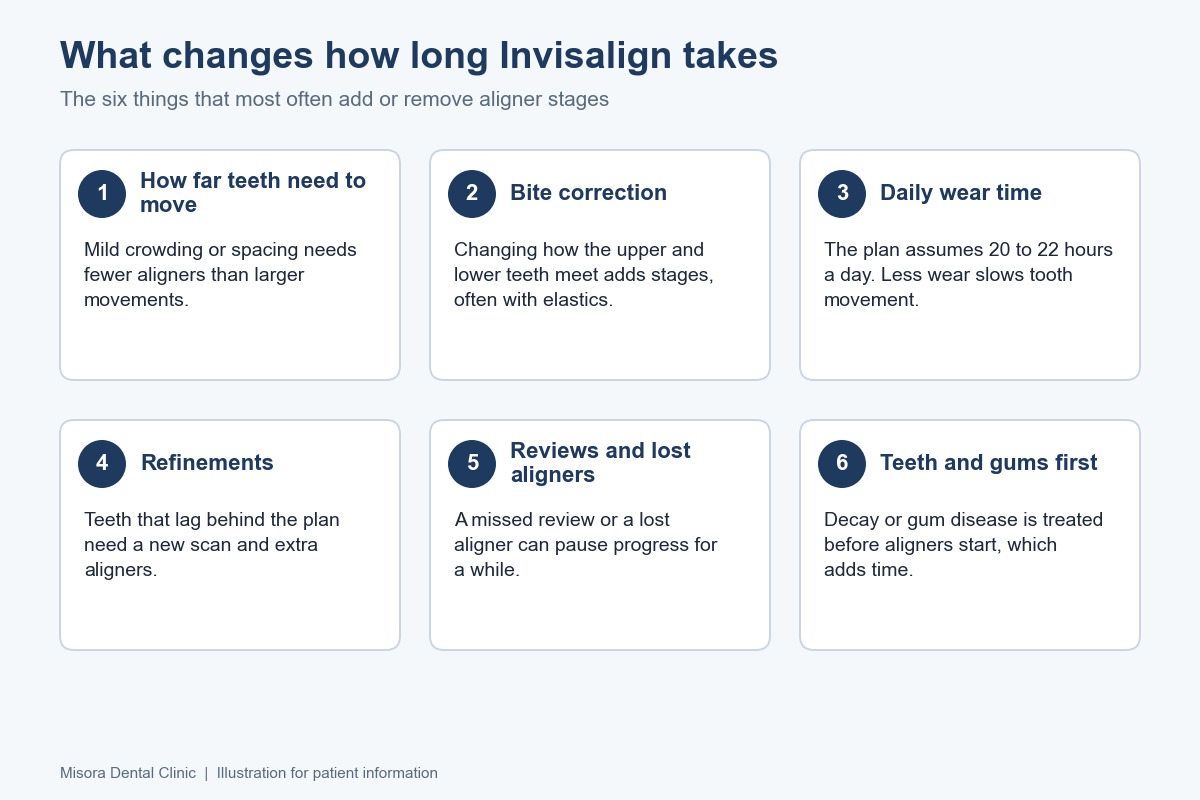
How far the teeth need to move
Each aligner moves teeth by a small, planned amount. Larger rotations, more crowding and movements of back teeth add stages. A plan limited to the front teeth is shorter, though it also changes less.
Whether the bite needs correcting
Changing how the upper and lower teeth meet usually adds stages and often needs elastics, small rubber bands worn between the arches. Elastics work only while they are worn, so wear time matters twice over.
How many hours a day the aligners are in
The plan assumes 20 to 22 hours a day. Aligners come out for meals, for drinks other than water and for brushing, then go straight back in. Leaving them in their case for an extra three hours on most days adds up to roughly a full day without force on the teeth every week, and the teeth fall behind the plan.
Refinements
Teeth do not always move exactly as the software predicts. A prospective study of 38 patients measured an average accuracy of about 50% across all planned tooth movements, with some types of movement tracking less closely than others (Haouili et al., 2020). Refinement aligners make up the difference, so ask how refinements are handled in your plan and your quotation.
Fillings, crowns and gum health
Adults often start treatment with fillings, crowns, missing teeth or areas of gum recession. The plan has to work around each of these, and some change the number of stages or the order in which teeth move. Gum disease needs to be stable before aligners start.
Reviews, lost aligners and dental work
Reviews are where the dentist checks fit and attachments and compares progress with the plan. A missed review, a lost aligner or a filling needed mid-treatment can pause progress. Long trips are manageable if you plan them with the clinic in advance, so the right aligners go with you.
Can treatment be shortened?
Wear time is the factor you control most. Change aligners only on the schedule you are given, attend reviews, and keep your teeth and gums healthy so treatment does not stop for dental work.
The interval between aligners is set by the dentist. Some plans use seven days per aligner and others 14, depending on the movement and how your teeth respond. Bone around each root has to remodel as the tooth moves, which sets a biological limit on how quickly any appliance can work.
Did you know Treatment length is usually quoted for the active phase only. Retainers follow, and they are part of the plan from the start. |
Invisalign compared with braces on timing
Fixed braces apply force continuously because they cannot be taken out. Aligners depend on wear time, which is their main advantage socially and their main risk clinically. For complex movements, braces may give more control, and the dentist should explain which suits your case. Our guide to Invisalign vs braces for adults compares the two in detail.
Wear time is the factor you control most.
What happens after the last aligner
Newly moved teeth sit in bone that is still remodelling, and teeth drift throughout life. Retainers hold the result. They may be removable clear retainers, a thin wire bonded behind the front teeth, or both. Wear is usually full time at first and then mainly at night, as the dentist advises. Ask what retainers are included and what a replacement costs, since a retainer will need replacing at some point.
Questions to ask about your Invisalign timeline
- How many aligners are in my plan, and how often will I change them?
- How often will I be reviewed in clinic?
- Are refinements included, and how many?
- Which retainers are included, and what does a replacement cost?
- What happens if I lose an aligner or travel for several weeks?
- Would fixed braces suit my case better, and why?
Fees are discussed at consultation, after the assessment. Invisalign and other orthodontic treatment are not Medisave-claimable.
Invisalign at Misora Dental
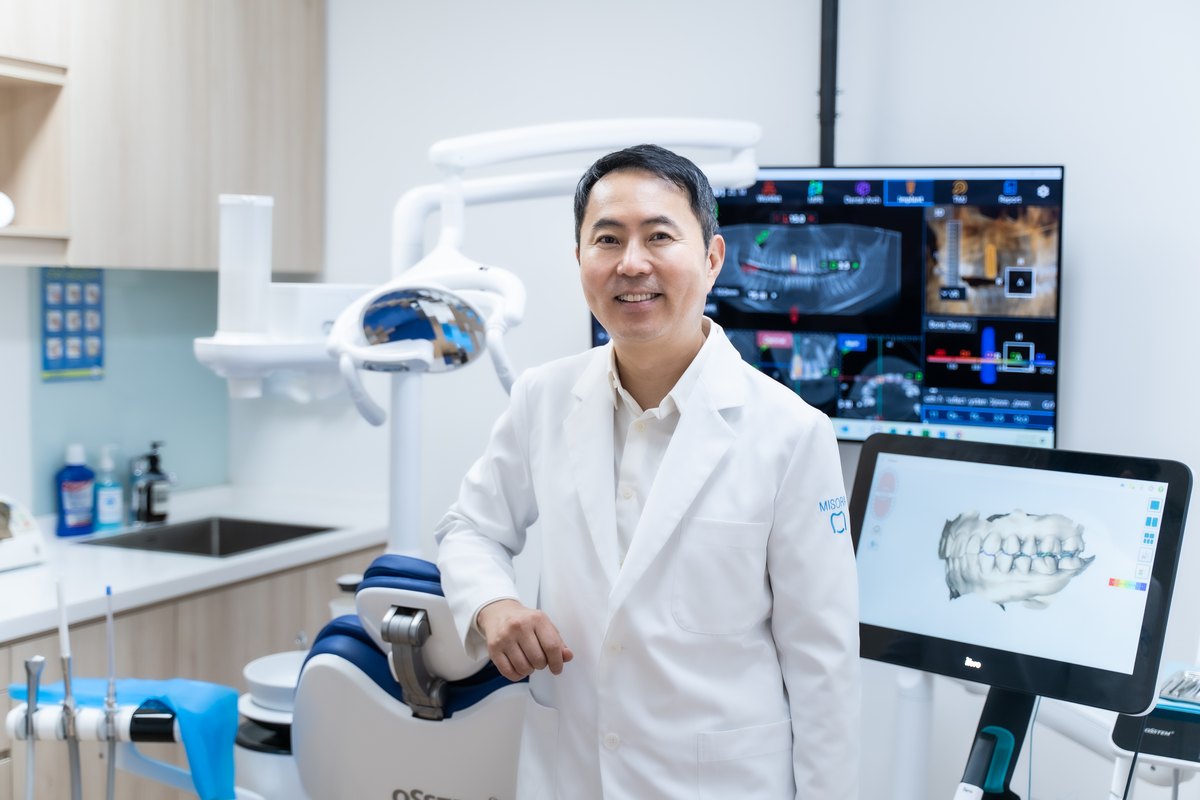
At Misora Dental, every patient is assessed and treated by Dr. Kang directly. Dr. Kang holds a DDS from Columbia University, New York, and has practised for over 30 years in Seoul and Singapore. Your ClinCheck plan is reviewed with you before any aligners are ordered, and if fixed braces would suit your case better, you will hear that at the assessment.
Read more about teeth straightening in Singapore with Invisalign at our Lucky Plaza clinic on Orchard Road. Korean and Japanese coordinators are available.