For most people, the worst pain comes before a root canal, from the inflamed or infected tooth. This guide covers what you are likely to feel in the chair and over the next few days, and which kinds of pain mean you should call the clinic.
In short
|
What this guide covers
- Why root canal treatment has a painful reputation
- What you feel during the procedure
- Why some teeth are harder to numb
- Pain after a root canal: what is normal
- What makes pain afterwards more likely
- Protecting the tooth after treatment
- When pain is a reason to call the clinic
- If you are weighing root canal treatment against extraction
- Root canal treatment at Misora Dental
- Frequently asked questions
Ask most people in Singapore what they expect from a root canal and pain is the first word that comes up. The treatment itself is carried out with the tooth numb. The pain belongs to the tooth beforehand, when the pulp inside it is inflamed or infected, and to the few days afterwards, when the tooth can ache as you bite. This article explains where root canal pain comes from, what each stage feels like, what is normal while it settles, and when to ask for a review.
Why root canal treatment has a painful reputation
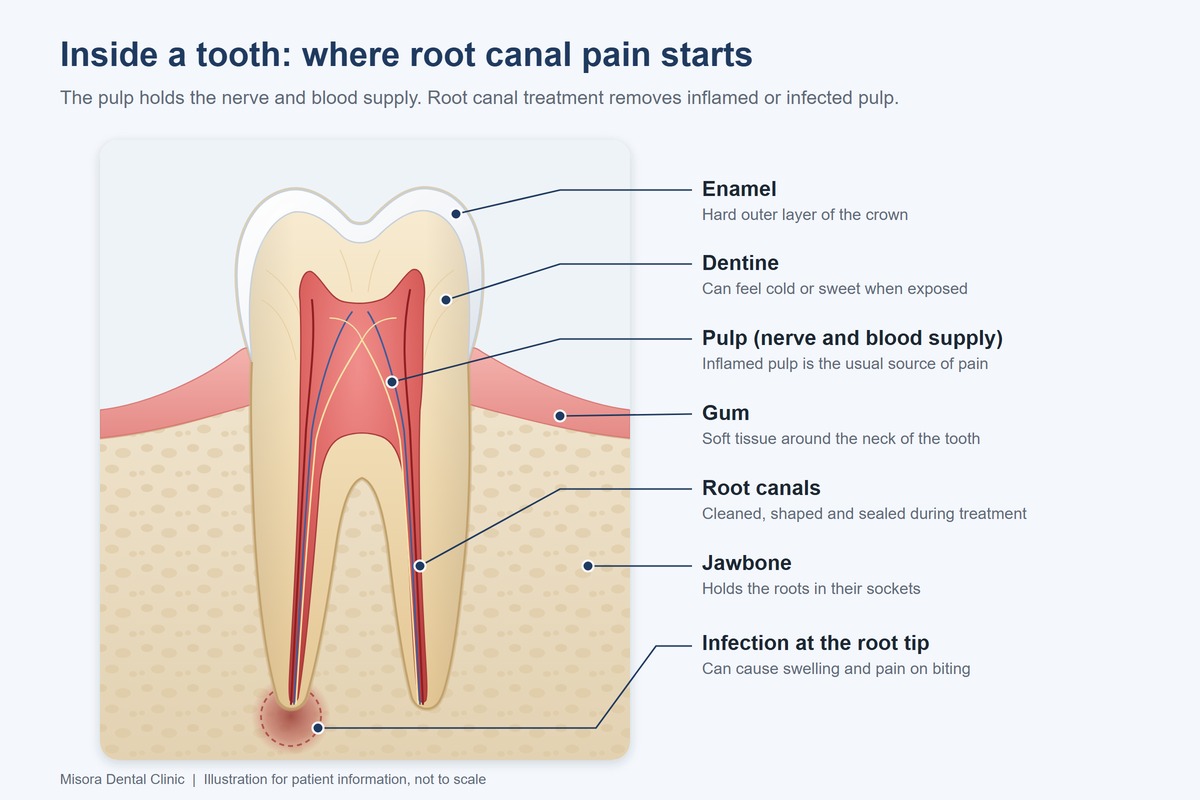
Inside every tooth is the pulp, soft tissue that holds the nerve and blood vessels. It fills a chamber under the crown and runs down narrow root canals to the tip of each root. Deep decay, a crack, a leaking filling or a knock can let bacteria reach it. Inflamed pulp swells inside walls of dentine that cannot stretch, and that pressure produces the throbbing, lingering ache people remember.
When the pulp is inflamed beyond recovery, a condition called irreversible pulpitis, or when it has died and become infected, root canal treatment removes it, disinfects the canals and seals them. Taking away the source of the pressure is why the pain tends to settle in the days after treatment.
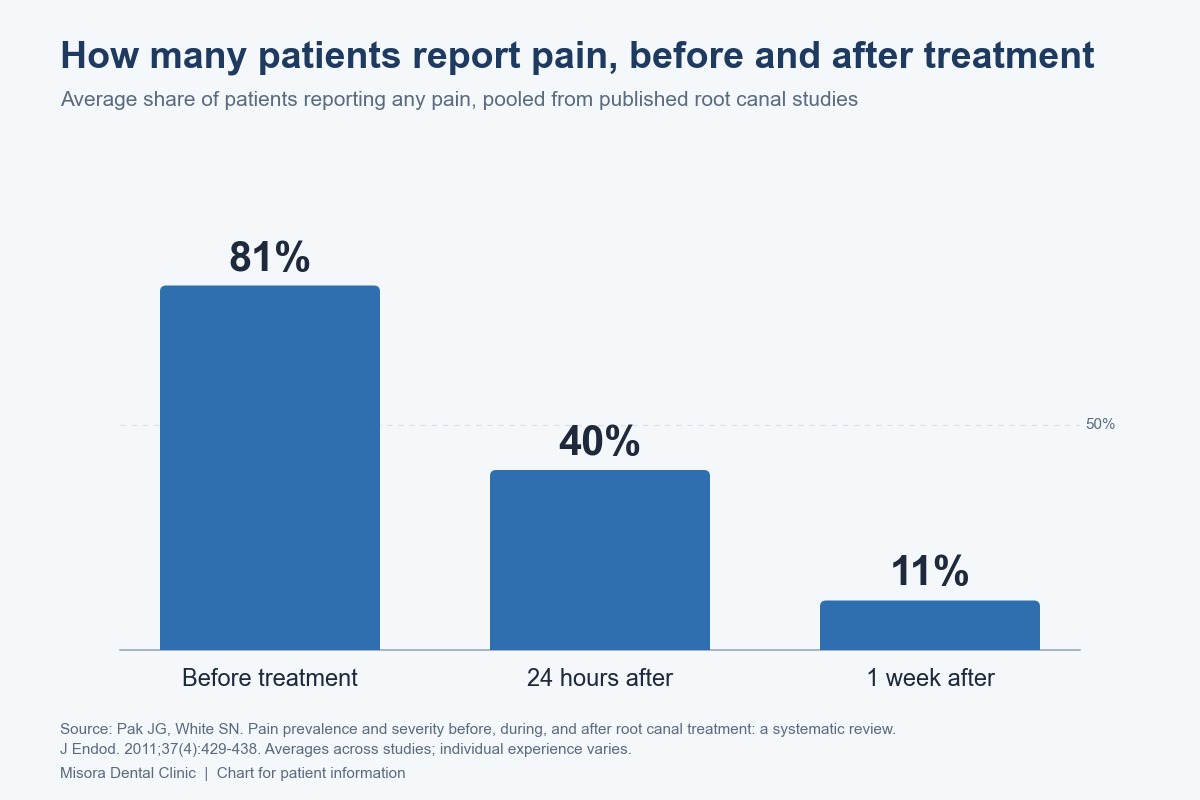
Expectation plays a part as well. In a study of 333 adults having root canal treatment, 43% expected severe pain beforehand and 22% reported severe pain during treatment, and younger patients both expected and reported more (Watkins et al., 2002). A review that pooled many studies found the same direction of travel: pain is most common before treatment and falls quickly afterwards (Pak and White, 2011).
What you feel during the procedure
Most root canal treatments are completed in one or two appointments. A tooth with a significant infection may have a medicated dressing placed at the first visit and the canals sealed at the second. Front teeth usually have one canal and molars three or four, which is the main reason a molar takes longer.
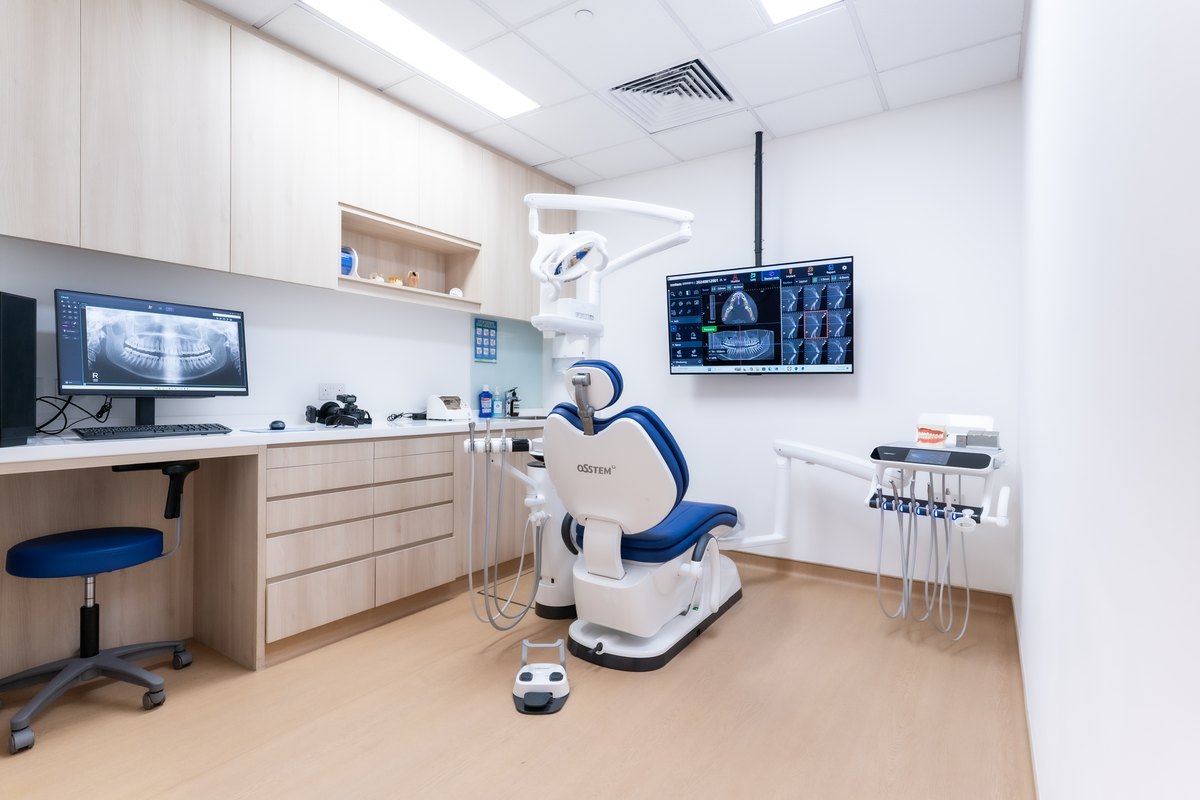
- The dentist examines the tooth and takes an X-ray. It shows the number and shape of the roots and whether infection has reached the bone at the root tip. Cold and tapping tests show how the nerve is responding.
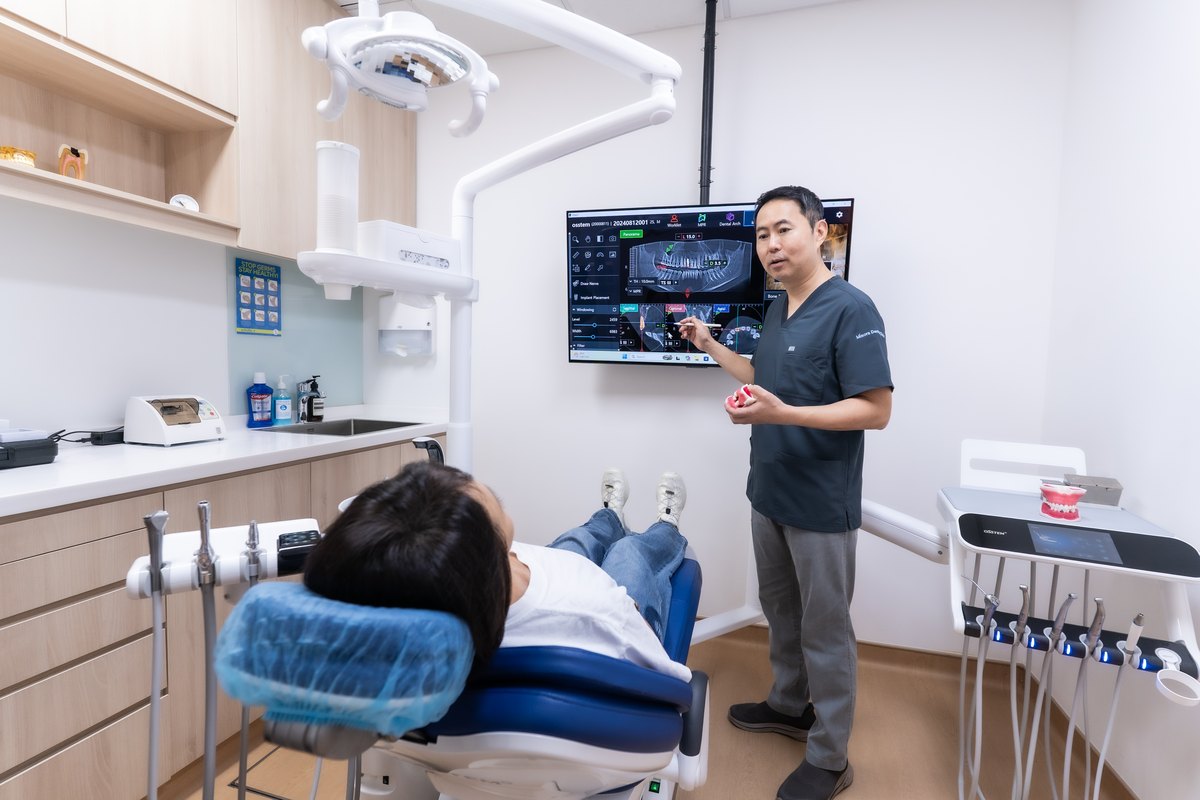
- A numbing gel goes on the gum first, then the local anaesthetic injection. For most patients this is the sharpest moment of the appointment. The dentist checks that the tooth is numb before going further.
- A thin rubber sheet called a dental dam goes around the tooth to keep it dry and clean. You breathe normally through your nose and can still swallow.
- The dentist opens the top of the tooth, removes the pulp, and cleans and shapes each canal with fine files and a disinfecting solution. You feel pressure and vibration. Your jaw may tire from staying open, so ask for a break whenever you need one.
- The canals are filled and sealed, and a temporary filling or the final filling closes the opening.
Important Sharp pain during treatment means the tooth is not fully numb. Raise your hand. More anaesthetic can be given, and the dentist waits until the tooth is numb before carrying on. |
Why some teeth are harder to numb
A tooth with badly inflamed pulp, sometimes called a hot tooth, can resist local anaesthetic. Lower molars are the usual example. The standard injection for them numbs a nerve that runs through the jawbone, and inflamed tissue responds less well. The review by Pak and White noted that supplemental anaesthesia was often needed in these cases.
Dentists have several ways around this: a second injection closer to the tooth, a different injection site, or a small amount of anaesthetic placed into the pulp once it is reached. The aim is a numb tooth before any cleaning starts. If a tooth has been hard to numb for you before, or you feel anxious about treatment, mention it at the assessment so the appointment can be planned with extra time and breaks.
Pain is most common before root canal treatment and falls quickly afterwards.
Pain after a root canal: what is normal
The anaesthetic wears off within a few hours, and the tooth often feels bruised. The tissue around the root tip was already inflamed, and cleaning the canals irritates it for a short time. Biting on the tooth is the most common trigger for discomfort over the first days. Over-the-counter painkillers, taken as the dentist advises, manage this for most patients.
Pooled data from published studies show the usual pattern. On average 81% of patients reported pain before treatment, 40% one day after and 11% one week after, and the pain that remained at one week was usually mild (Pak and White, 2011).
| Stage | What patients commonly feel | What helps |
|---|---|---|
| Before treatment | Throbbing or lingering pain with hot or cold, pain on biting, or no pain at all if the nerve has died | An examination and X-ray to find the cause |
| During treatment | Pressure, vibration and a tired jaw once the tooth is numb | More anaesthetic if anything feels sharp, and breaks when needed |
| First 1 to 2 days | Tenderness when biting and a dull ache as the numbness wears off | Painkillers as advised, and chewing on the other side |
| Days 3 to 7 | Tenderness usually easing day by day | Soft food on that side until the final filling or crown |
| After the final restoration | The tooth should feel much like its neighbours when you chew | Regular check-ups, with an X-ray at review |
Did you know A tooth whose nerve has died can stop hurting while the infection at the root tip remains. A tooth that ached and then went quiet is still worth an X-ray. |
What makes pain afterwards more likely
One study followed more than 650 patients treated in 62 dental practices in the United States. The clearest predictor of severe pain in the week after treatment was how much pain the patient had before it (Law et al., 2015). That is one more reason to have a painful tooth assessed early.
Two practical points are within your control. A temporary filling that sits slightly high takes the full force of your bite and keeps the tooth sore; a quick adjustment at the clinic usually settles it. Until the final filling or crown is placed, chewing hard on that side loads a tooth that is still settling.
Protecting the tooth after treatment
A root-treated back tooth has often lost structure to decay, earlier fillings and the opening made for treatment. Back teeth take most of the chewing force, so a crown is typically recommended on a molar or premolar after root canal treatment. The right restoration depends on how much sound tooth is left, and the dentist explains the options before you decide.
Until it is restored, chew on the other side, keep very hard food such as ice and nuts away from the tooth, and keep the review appointment.
When pain is a reason to call the clinic
Before any treatment, a dentist should see a tooth that shows any of these signs:
- Pain that lingers for more than a few seconds after something hot or cold
- Throbbing pain that starts on its own or wakes you at night
- Pain when biting down on one tooth
- A small bump on the gum near the tooth, which may discharge
- A tooth that has turned grey or darker
- Swelling of the gum or face
After treatment, call the clinic instead of waiting for your review if:
- Pain gets worse after the third day instead of easing
- Swelling appears or grows, or you develop a fever
- Painkillers taken as advised do not control the pain
- The temporary filling comes out, or the bite feels high
- You notice a rash or another reaction to a prescribed medicine
Swelling of the face or neck that spreads, or any difficulty swallowing or breathing, needs urgent care on the same day, at the emergency department if the clinic is closed.
If you are weighing root canal treatment against extraction
The alternative to root canal treatment is usually removing the tooth. Extraction also ends the infection, but it leaves a gap, and an unreplaced gap can let neighbouring teeth drift and the bone shrink. Replacing the tooth later means a dental implant, a bridge or a denture, each with its own cost and timeline, and our comparison of implants and bridges sets out the differences. Where a tooth can be kept, keeping it is generally preferred. Where it cannot, the dentist should say so and explain why.
Root canal treatment at Misora Dental
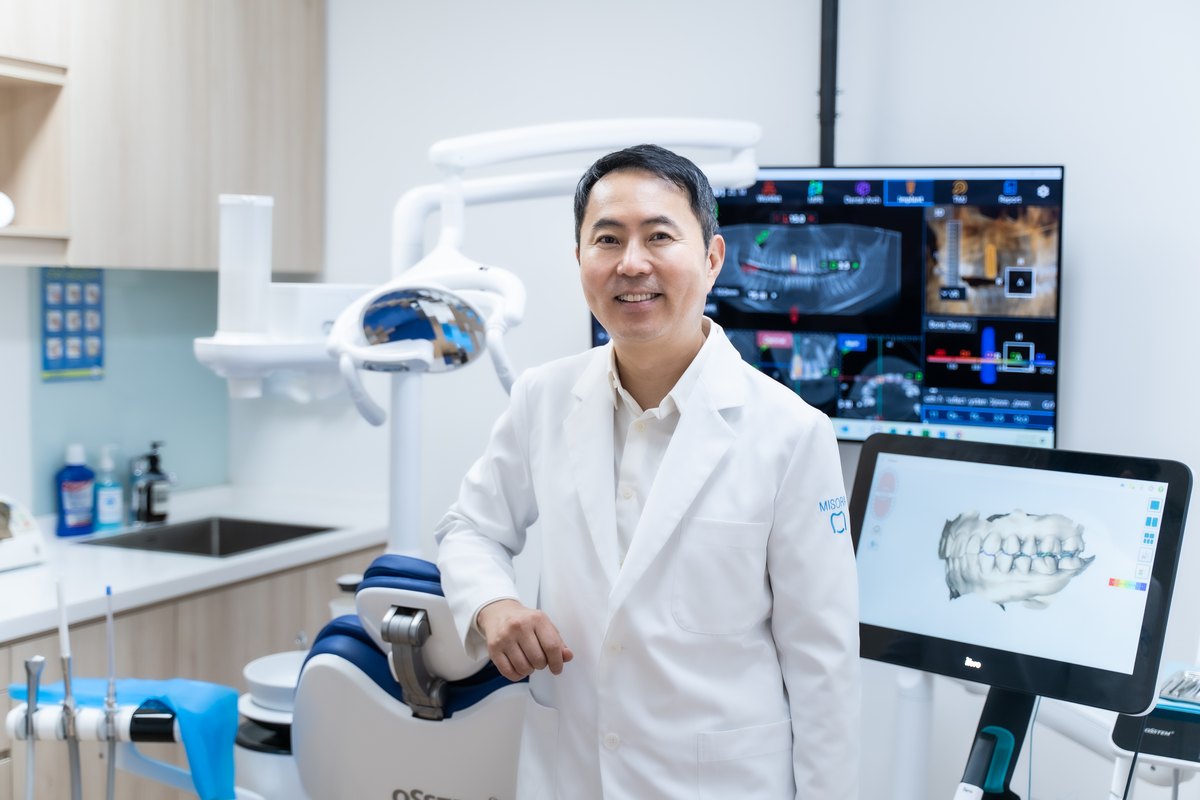
At Misora Dental, every patient is assessed and treated by Dr. Kang directly. Dr. Kang holds a DDS from Columbia University, New York, and has practised for over 30 years in Seoul and Singapore. His practice focuses on crowns, bridges, veneers and implant restorations, which matters after a root canal because a back tooth often needs a crown to complete the treatment.
Read more about root canal treatment in Singapore at our clinic in Lucky Plaza, Orchard Road, or meet Dr. Kang. Korean and Japanese coordinators are available, so you can ask your questions in the language you are most comfortable with.