Clear aligners or fixed braces? The answer depends on what needs moving, how consistently you will wear them, and what you can live with at work. Here is the comparison in plain clinical terms.
In short
|
What this guide covers
- How teeth actually move
- Invisalign vs braces: the practical comparison
- What each can and cannot address
- The treatment process, step by step
- Treatment time compared
- Cost in Singapore and what the fee covers
- Realistic expectations, limitations and retention
- When to see a dentist
- How to decide
- Frequently asked questions
How Teeth Actually Move
A tooth root sits in a socket, suspended by the periodontal ligament, a thin layer of fibres between root and bone. When a light, sustained force is applied, the ligament on one side is compressed and the other side is stretched. The body responds by resorbing bone where it is compressed and laying down new bone where it is stretched, so the tooth migrates through the jaw and the socket rebuilds around it.
Three points follow from that biology, and they explain most of the differences between the two systems:
- Light continuous force moves teeth more predictably than heavy intermittent force, which is why wear time matters more than how tight an appliance feels.
- Newly moved teeth sit in bone that is still remodelling for months afterwards, which is why retainers are part of the treatment rather than an afterthought.
- Some movements are harder than others. Tipping the crown of a tooth is straightforward. Moving a whole root through bone, rotating a round tooth such as a premolar, or closing an extraction space needs more control, and that is where fixed appliances have an advantage.
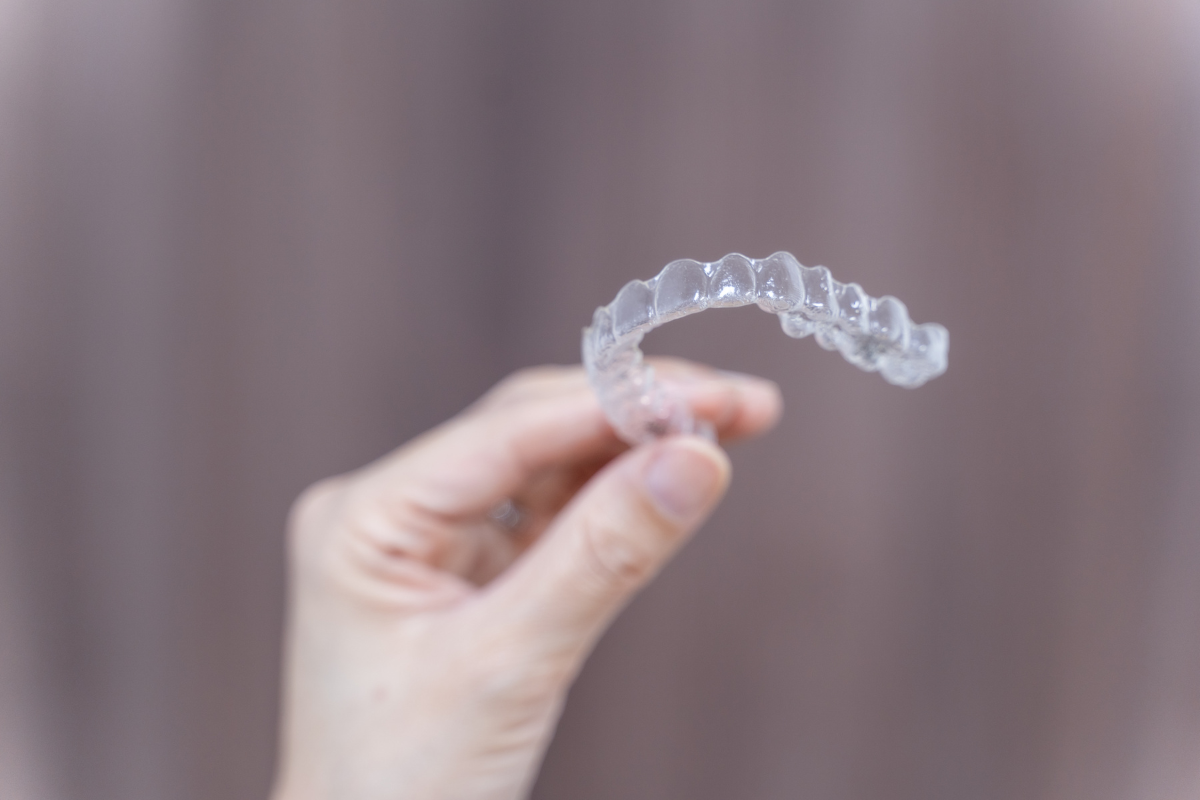
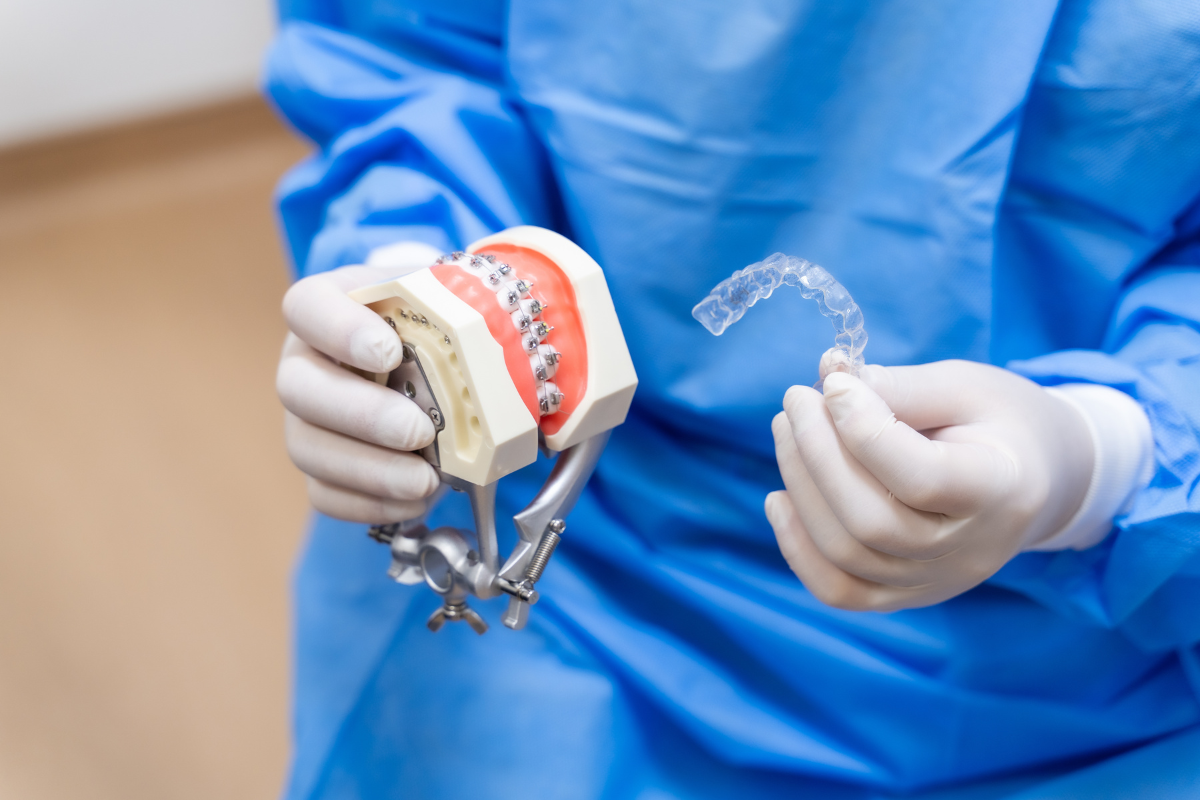
Aligners transmit force through a plastic shell, usually with small tooth-coloured attachments bonded to selected teeth to give the aligner something to grip. Braces transmit force through brackets and a wire, which can be bent and adjusted in three dimensions.
Invisalign vs Braces: The Practical Comparison
Invisalign | Fixed braces | |
Visibility | Clear, visible at close range | Visible; ceramic brackets are less noticeable than metal |
Removable | Yes, for eating and cleaning | No |
Wear time | 20 to 22 hours a day | Always in place |
Eating | Aligners out, no food restrictions | Hard and sticky food avoided |
Cleaning | Brush and floss normally with aligners out | Threaders or interdental brushes needed |
Discomfort | Tightness for a day or two with each new set | Soreness for a few days after each adjustment |
Appointments | Reviews every 6 to 10 weeks in suitable cases | Adjustments every 4 to 8 weeks |
Common issues | Lost or cracked aligner, attachment comes off | Loose bracket, poking wire |
Control of complex movement | More limited | Greater |
Medisave | Not claimable | Not claimable |
What Each Can and Cannot Address
Clear aligners are commonly used for:
- Mild to moderate crowding.
- Spacing and gaps.
- Mild bite discrepancies.
- Relapse after previous orthodontic treatment.
Fixed braces are often the more suitable option for:
- Severe crowding, or teeth rotated well out of position.
- Cases planned with extractions, where spaces must be closed with root control.
- Significant bite correction, including deep bites and open bites.
- Patients who would prefer not to manage a removable appliance.
Neither system corrects a problem that is not orthodontic. Where the concern is shape or shade rather than position, veneers or whitening may be discussed instead, and where a tooth is missing, implant treatment may be raised. Gum disease and decay are treated before any tooth movement begins, because moving teeth through inflamed tissue risks the bone support that holds them.
The Treatment Process, Step by Step
- Assessment. Examination, radiographs and photographs, with the gums and any decay checked first.
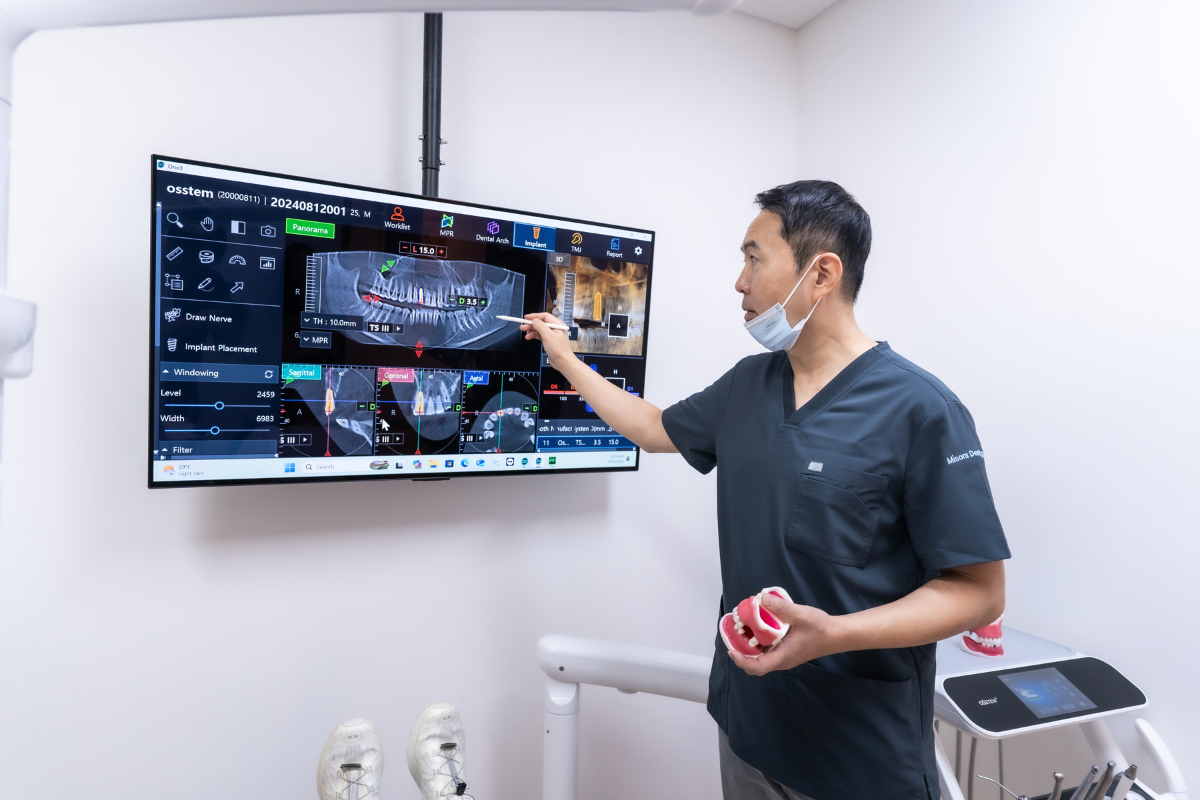
- Records and digital scan. An intraoral scan captures the arches. For aligners this becomes the digital plan; for braces it records the starting position.
- Plan discussion. What is being corrected, which movements are involved, the estimated length, and what the fee covers.
- Fitting. Attachments are bonded and the first aligners are issued, or brackets are bonded and the first wire is placed.
- Active treatment. Aligners are changed every one to two weeks as directed; braces are adjusted every four to eight weeks.
- Refinement. Where teeth have not tracked as planned, additional aligners are made, or the wire sequence is adjusted.
- Retention. Retainers are fitted once the teeth are in position, with wear instructions that continue long term.
Two procedures come up often during planning, and it helps to know what they are before they are proposed. Interproximal reduction is the removal of a fraction of a millimetre of enamel between teeth to create space; it is planned, measured and not reversible. Elastics are small rubber bands worn between the arches to correct how the jaws meet, and they depend entirely on the patient wearing them.
Treatment Time Compared
Treatment length depends on the complexity of the case and is estimated after assessment. Mild crowding or spacing is measured in months; cases involving bite correction or extractions run longer, with either system.
Aligner treatment is also affected by wear time, because the appliance only works while it is in the mouth. Time spent out adds to the total, and consistently short wear is the most common reason a plan stops tracking. Fixed braces work continuously, which is one reason they are often suggested where compliance is uncertain.
Cost in Singapore and What the Fee Covers
Across Singapore clinics, adult orthodontic treatment commonly falls within published market ranges of roughly SGD 3,500 to SGD 9,000, with case complexity, appliance type and treatment length accounting for most of the difference. Those are general market figures, not Misora fees.
What varies between quotations is as important as the figure. Ask whether the fee includes records and scans, all aligners or all adjustments, refinements if teeth do not track, the first set of retainers, and reviews after treatment ends.
Orthodontic treatment, including clear aligners, is not Medisave-claimable. Fees at Misora are discussed at consultation, after assessment, and a written quotation sets out what the plan includes.
REVIEW NOTE (internal, remove before publishing): market range to be re-verified against published Singapore clinic fee pages in the month of publication. If a Misora figure is to be shown, only an exact and final price may be published, with no “from” and no range.
Realistic Expectations, Limitations and Retention
- Teeth drift throughout life. Without retainer wear, a finished result will relapse, and that is true of both systems.
- Aligners are removable, which is an advantage socially and a risk clinically. The plan assumes 20 to 22 hours a day.
- Attachments are tooth-coloured but visible at close range, so aligner treatment is discreet rather than invisible.
- Orthodontics moves teeth; it does not change the shade of enamel or repair a chipped edge. Those are separate treatments, usually planned after the teeth are in position.
- Gum recession, root shortening and decay around brackets or attachments are recognised risks of orthodontic treatment, and they are monitored at reviews.
- Where the underlying issue is skeletal rather than dental, there are limits to what either appliance can achieve, and a specialist referral may be advised.
When to See a Dentist
During treatment, contact the clinic rather than waiting for the next review if you notice:
- An aligner that no longer seats fully, or a visible gap between aligner and tooth.
- A lost or cracked aligner, or an attachment that has come off.
- A loose bracket or a wire that is catching the cheek.
- Persistent pain rather than the usual tightness for a day or two.
- Bleeding gums, swelling, or a tooth that feels unusually loose.
Orthodontic cases at Misora are assessed by Dr Kang Minsok, DDS (Columbia University, New York, USA), who has practised for over 30 years in Seoul and Singapore. Where a case is better managed by another practitioner, that is said at the assessment. Korean and Japanese coordinators are available, so the consultation can be held in the language you prefer.
How to Decide
- Ask what is actually being corrected: crowding, spacing, bite, or a combination.
- Ask whether your case is suitable for aligners, and what the plan would be if it is not.
- Be honest about wear time. 20 to 22 hours a day is the requirement, not a target.
- Ask how progress is monitored and what happens if teeth do not track as planned.
- Ask what the quotation includes: records, aligners or adjustments, refinements and retainers.
- Ask what retention involves after treatment, and what a replacement retainer costs.