The surgery itself is done under local anaesthetic, so what most patients describe afterwards is soreness rather than sharp pain. Here is what happens at each stage, why it feels the way it does, and when discomfort is a reason to call the clinic.
In short
|
What this guide covers
- Why implant surgery is less painful than people expect
- What the procedure feels like, stage by stage
- Anaesthetic and sedation options
- Pain and swelling afterwards: what is normal
- Recovery timeline and time off work
- What makes recovery more uncomfortable
- How to keep discomfort low
- When to call the clinic
- Frequently asked questions
Why Implant Surgery Is Less Painful Than People Expect
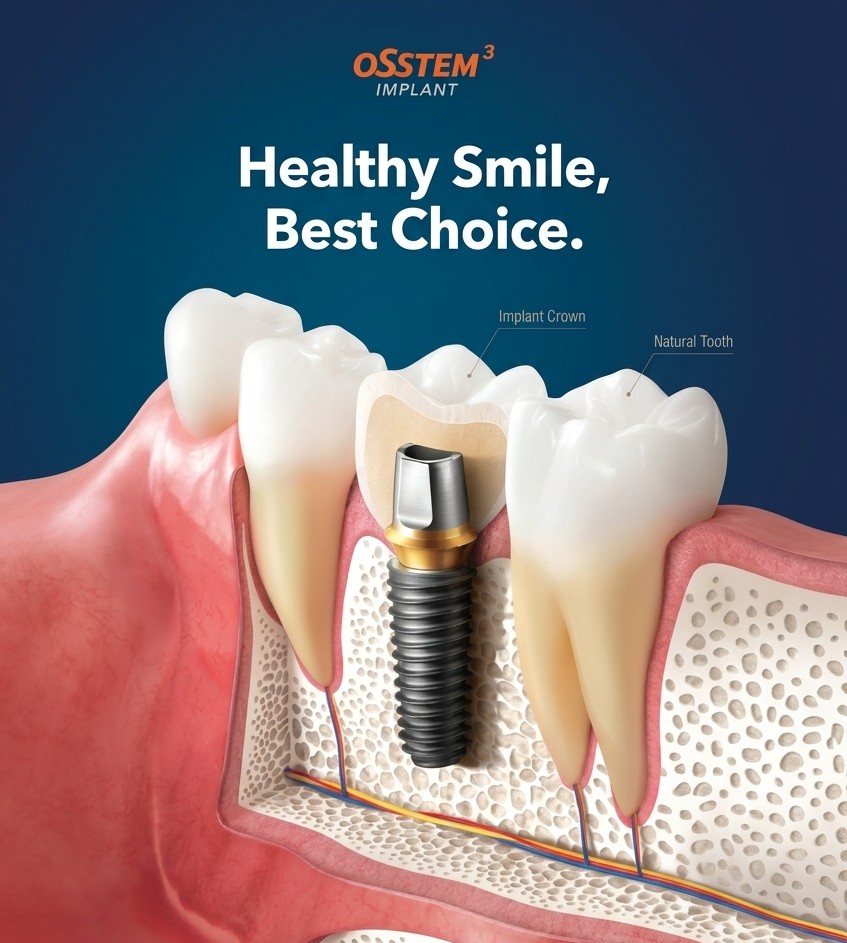
An implant is a titanium fixture placed into the jawbone where the root of the tooth used to sit. The phrase that alarms people is “into the bone”. Here is how the tissues involved actually register pain.
- Gum tissue (gingiva and mucosa) is richly supplied with nerve endings. This is where most post-operative soreness comes from, because the gum is lifted and then sutured.
- Cortical and cancellous bone. Bone itself has limited pain innervation compared with soft tissue. The periosteum, the membrane covering the bone, is more sensitive, and it is handled during surgery.
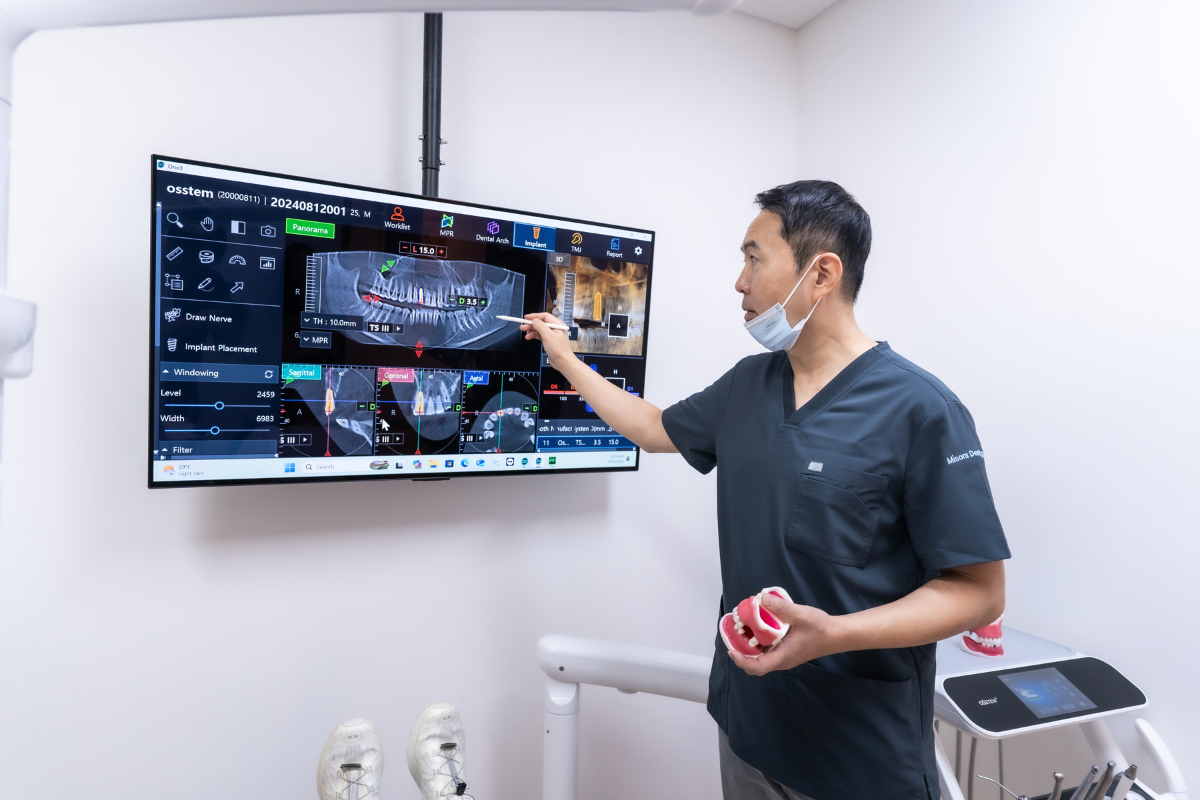
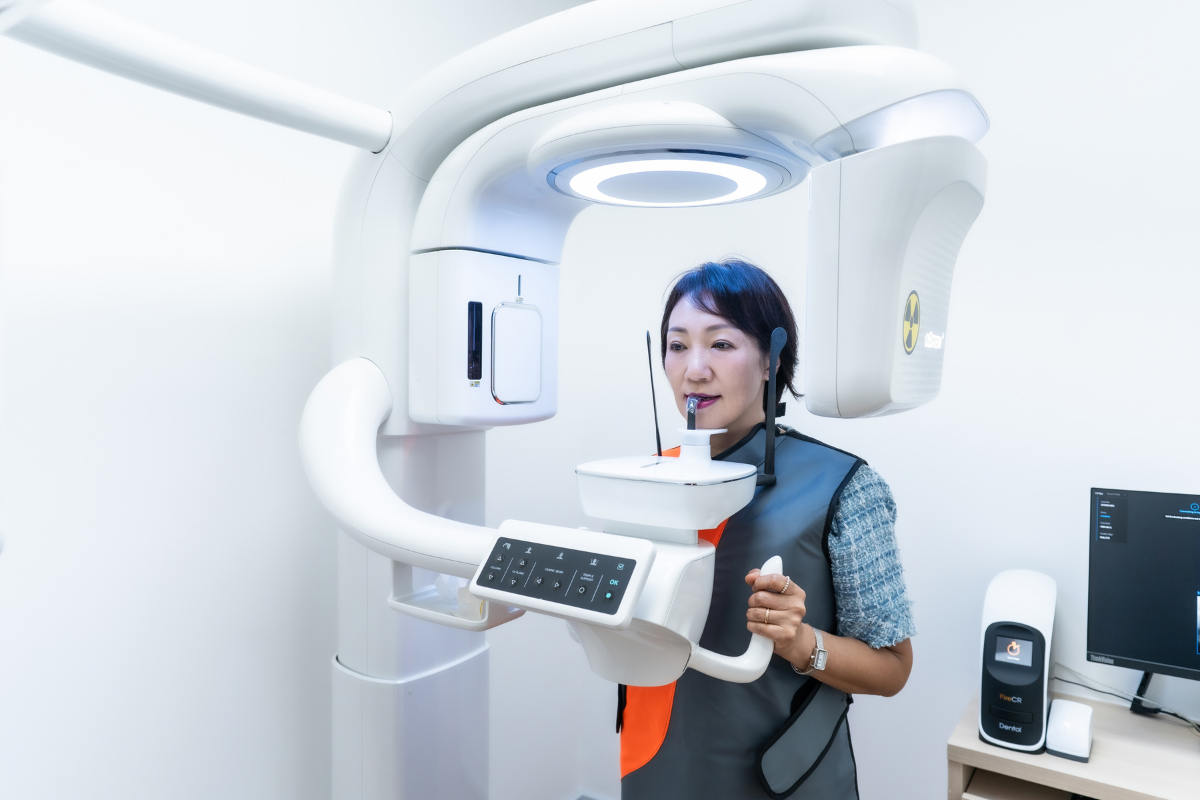
- The nerves that matter are mapped before surgery. In the lower jaw the inferior alveolar nerve runs through a canal in the bone; in the upper back jaw the maxillary sinus sits above the roots. A CBCT scan measures the distance to both in three dimensions so the implant length and position are planned around them.
So discomfort after implant surgery behaves much like discomfort after an extraction. It comes from the soft tissue and the inflammation around it, and it follows a predictable curve.
What the Procedure Feels Like, Stage by Stage
- Numbing. Local anaesthetic is given at the site. The injection itself is the sharpest part of the appointment for most patients, and topical gel is normally applied first.
- Access. The gum is opened at the site. You feel movement and pressure, not cutting.
- Preparing the site. A sequence of drills shapes the bone at controlled speed with irrigation. Patients report vibration and a sensation of pressure through the jaw. This is the part that sounds worse than it feels.
- Placing the fixture. The implant is turned into the prepared site. Pressure again, for a short period.
- Closing. Sutures are placed. A single straightforward implant often takes under an hour in suitable cases.
If anything becomes uncomfortable during the procedure, more anaesthetic can be given. There is no reason to wait it out, and saying so does not slow the appointment down.
Anaesthetic and Sedation Options
- Local anaesthetic. Standard for implant placement. The site stays numb for a few hours after the appointment.
- Oral sedation. A prescribed tablet taken before the appointment to reduce anxiety. You will need someone to take you home afterwards.
- Intravenous sedation. Delivered by a trained provider with monitoring, for longer appointments or higher anxiety. Suitability is assessed case by case and referral may be arranged.
Sedation manages anxiety; the local anaesthetic controls sensation. Sedation is added to the local anaesthetic, not used in place of it. Tell the clinic at the assessment if past dental treatment has been difficult, so the appointment can be planned with longer chair time and breaks.
Pain and Swelling Afterwards: What Is Normal
Numbness wears off over two to four hours and the site becomes tender as it does. Swelling is an inflammatory response to surgery rather than a sign that something is wrong, and it commonly peaks at around 48 hours before easing.
- Painkillers. Take the first dose before the anaesthetic wears off rather than waiting for discomfort to arrive. Most patients manage the first two days with over-the-counter analgesics.
- Cold packs. On the cheek in short intervals during the first 24 hours, to limit swelling.
- Bruising. Light bruising on the cheek or under the chin can appear a day or two later and fades on its own.
- Bleeding. Slight oozing on the first day is expected. Steady bleeding is not.
- Antibiotics or a prescribed rinse are given where clinically indicated, not as a routine.
Recovery Timeline and Time Off Work
Stage | What to expect |
Day 1 | Numb for a few hours, then tender. Soft, cool food. No rinsing or spitting. Rest. |
Days 2 to 3 | Swelling usually at its highest, then easing. |
Week 1 | Soreness settling. Chew on the other side. Sutures reviewed or removed where used. |
Weeks 2 to 12 | Little to feel. Bone is bonding to the implant surface, a process called osseointegration. |
Months 3 to 6 | Healing checked, then the abutment and crown stage begins. |
Many patients return to desk work the next day after a single implant. Two to three days is more realistic after multiple implants, an extraction on the same day, or grafting. Strenuous exercise is usually paused for several days, because raised blood pressure can disturb a settling site.
The quiet months are the part patients ask least about and should know most about: there is little to feel while the bone bonds to the implant surface, and a temporary tooth can usually be worn so the gap is not visible. See our guide to implants vs a bridge for how that timeline compares with the alternative.
What Makes Recovery More Uncomfortable
- Bone grafting or a sinus lift. These add a second surgical site, so swelling is usually greater and the healing period before restoration is longer.
- Extraction at the same appointment. The socket heals alongside the implant site.
- Several implants in one visit. More tissue handled, more inflammation.
- Smoking. Reduces blood supply to the healing tissue, slows healing and raises the risk of implant failure.
- Uncontrolled diabetes or certain medications. Healing is slower, which is why the medical history is reviewed before surgery is planned.
How to Keep Discomfort Low
- Eat soft, cool food for the first few days and chew away from the site.
- Do not smoke, and avoid alcohol while the site is settling.
- Do not rinse forcefully or use a straw on the first day; disturbing the clot prolongs healing.
- Keep the rest of the mouth clean and follow the cleaning instructions given for the surgical site.
- Sleep with the head slightly raised for the first night or two.
- Attend the review appointments even if the site feels fine, so healing can be checked before the crown stage.
When to Call the Clinic
Contact the clinic rather than waiting for the next review if you notice:
- Pain that increases after day three instead of easing.
- Swelling that worsens after day three, or a fever.
- A bad taste, discharge, or bleeding that does not stop with gentle pressure.
- Numbness or tingling in the lip or chin that persists well after the anaesthetic should have worn off.
- A loose feeling in the implant or in the temporary tooth.
- A sinus-related symptom after upper back-jaw surgery, such as congestion on one side or fluid when blowing the nose.
None of these is common, and each is easier to manage early. Implant cases at Misora are assessed and treated by Dr Kang Minsok, DDS (Columbia University, New York, USA), who has practised for over 30 years in Seoul and Singapore. His practice focuses on crowns, bridges, veneers and implant restorations. Korean, Japanese and local coordinators are available, so the consultation can be held in the language you prefer.