
The type of implant used depends on your clinical assessment, bone volume, number of missing teeth, jaw anatomy, and overall dental condition. The most appropriate approach is advised after a thorough evaluation.
Replaces a single missing or damaged tooth with an implant-supported crown, placed without involving the adjacent teeth. Used after decay, trauma, or a failed restoration.
Replaces several adjacent missing teeth using fewer implants. Adjacent healthy teeth aren’t modified, and the bridge is fixed in place.
For significant or complete tooth loss, a full arch is supported by several implants. Bone grafting may be needed depending on available bone volume.
Where the jawbone is insufficient, grafting rebuilds the structure first using graft materials, a sinus lift, or guided regeneration. Placement follows healing, typically over several months.
Dental implants are the only tooth replacement option that integrates with the jawbone, providing a stable, fixed foundation for a prosthetic tooth. The following outlines their functional benefits as described in clinical literature.
Anchored directly into the jawbone, implants provide a stable foundation that supports normal eating, speaking, and chewing. Unlike removable dentures, they stay fixed in place and do not need to be taken out for cleaning.
Implants transmit chewing forces to the jawbone, helping to reduce the bone loss that follows tooth loss. Without this stimulation from a tooth root, the jawbone gradually resorbs over time.
Implants are placed directly into the jawbone and support the crown independently. This avoids placing additional load on neighbouring teeth, which is required in tooth-supported bridges or dentures.
Implants fill the gap left by a missing tooth, helping to maintain alignment and prevent the shifting or crowding of adjacent teeth. This reduces the oral hygiene challenges and associated risk of decay and gum disease that can follow tooth loss.
Implants restore normal chewing function without the dietary limitations associated with dentures. They also help maintain clear speech by restoring proper tooth structure and support.
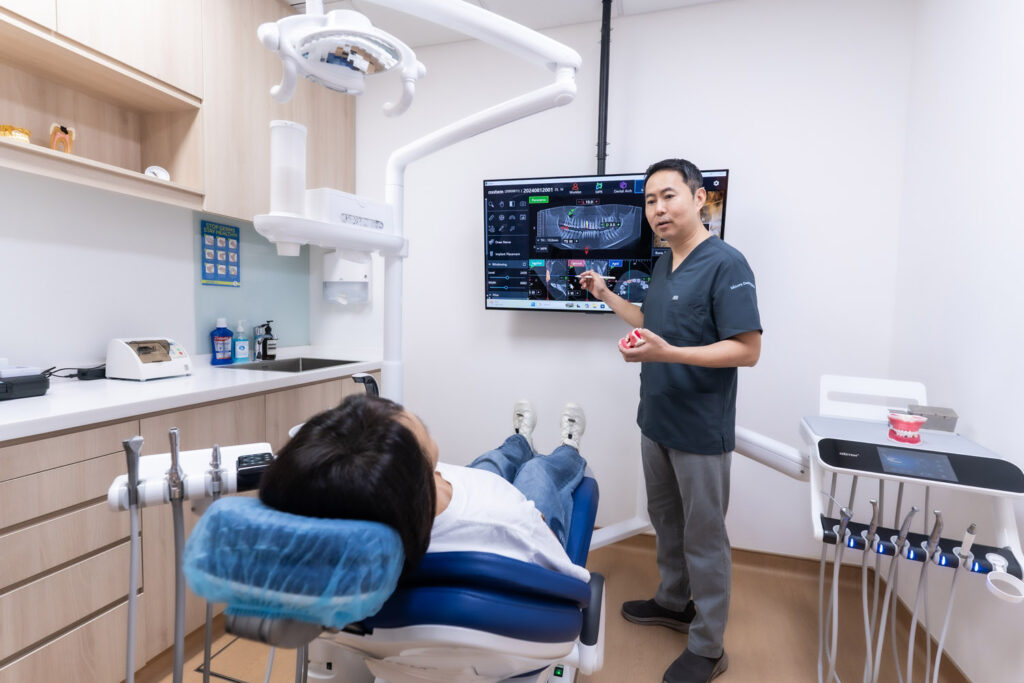
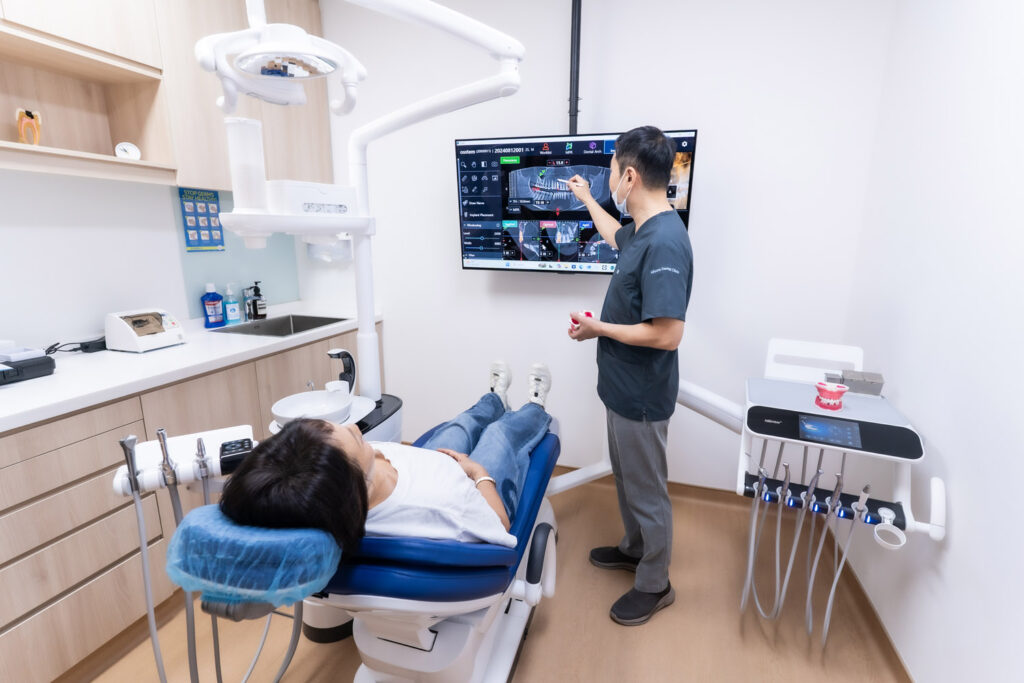
If you have missing teeth, or if your dentures or dental bridge feel unstable or uncomfortable, dental implants may be considered. Suitability depends on several clinical factors and is assessed on a case-by-case basis.
Implants are not suitable for everyone. Bone volume, gum health, medical history, and smoking habits are assessed before any recommendation. Where bone volume is insufficient, bone grafting may be required prior to implant placement.
| Medisave Claim Information | |
|---|---|
| What May Be Claimable | The surgical component of implant placement, including the implant fixture and, where clinically required, bone grafting, may be claimable under Medisave, subject to eligibility as determined by the CPF Board. |
| What Is NOT Claimable |
|
| Important Eligibility Caveat | Medisave eligibility is not determined by the clinic. Approval is based on your clinical condition and account status, as assessed by the CPF Board. Guidance on the claim process will be provided during consultation if implant treatment is clinically appropriate. |
Fees at Misora depend on your clinical assessment, including the number of implants required, the need for bone grafting, and the type of restoration. A clear fee estimate is provided after a thorough examination. Fees are quoted as exact amounts, not “from” ranges.
The procedure is performed under local anaesthetic, and the implant site remains numb throughout. Mild to moderate discomfort after the procedure is common and usually manageable with over-the-counter analgesics. What to expect will be explained before treatment.
Treatment duration depends on whether bone grafting is required and how osseointegration progresses. In a typical case without grafting, implant placement is followed by a healing period of 3 to 6 months before crown restoration. Your timeline will be discussed at consultation.
The surgical component of implant placement may be claimable under Medisave, subject to eligibility as assessed by the CPF Board. The crown is not claimable. Eligibility is not guaranteed, and the process will be explained during consultation.
Well-placed and well-maintained implants can function for many years. Long-term success depends on bone quality, oral hygiene, regular professional care, and the absence of complications such as peri-implantitis. No specific lifespan can be guaranteed.
Suitability depends on factors such as bone volume, general health, gum condition, and occlusion. Not all patients are immediately suitable. Bone grafting or management of medical conditions may be required before placement. A thorough assessment is conducted at consultation.
Specialist-trained care. Clear fees. Assessment first.